
Chapter 1 - page 13
blotted, worldly, clamors
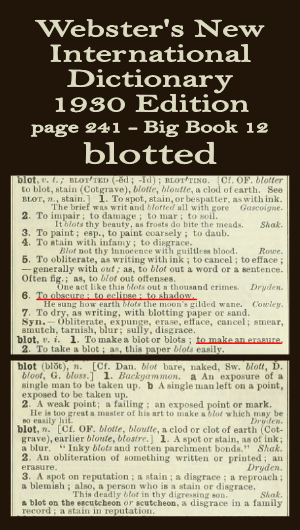
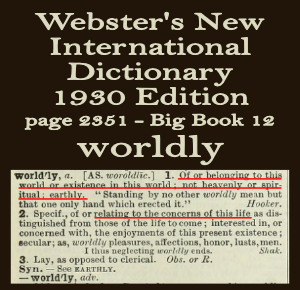
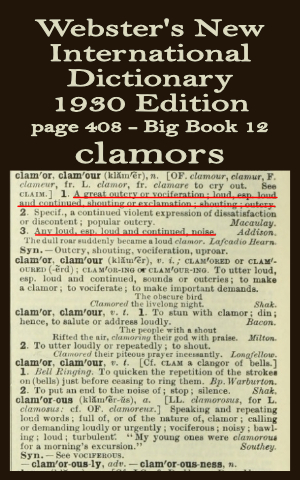
"But soon the sense of His presence had been blotted out by worldly clamors, mostly those within myself."
1
Big Book - Bill's Story - spans pages 12 and 13
In this sentence the word blotted functions as a past participle verb. The word worldly functions as an adjective. The word clamors functions as a plural noun. 2
The sense of a Higher Power's presence is erased by the events of everyday life, especially in the chaos created by one's own thinking. An example of clamor, "the clamoring of the church bells". Also note it did not erase His presence only the sense of it.
Definitions from Webster's 1930 edition. 3
delirium tremens
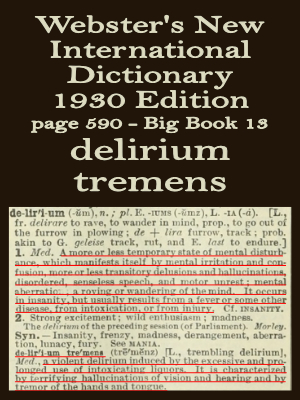
"Treatment seemed wise, for I showed signs of delirium tremens." Big Book - Bill's Story - page 13. 1
In this sentence the phrase delirium tremens functions as a noun phrase. 2
Delirium Tremens (DT's) - a severe form of alcohol withdrawal.
Delirium Tremens (DTs) is a severe form of acute alcohol withdrawal marked by shaking, hallucinations, and delirium. "Wet Brain," or Wernicke-Korsakoff Syndrome (WKS), involves thiamine deficiency, leading first to acute confusion, lack of voluntary muscle coordination, and or eye issues. Untreated, it evolves into chronic Korsakoff’s psychosis, which includes memory loss and the fabrication, distortion, or misinterpretation of memories without conscious intent to deceive. Often described as "honest lying," the individual sincerely believes these memories are accurate and may be extremely convincing to others. Both are severe alcohol-related conditions but differ: DTs are sudden and intense, while WKS develops gradually due to poor nutrition. The two can occur together, with DTs often preceding WKS.
Definition from Webster's 1930 edition. 3
ruthlessly, 'root and branch'
I ruthlessly faced my sins and became willing to have my new-found Friend take them away, root and branch."
1
Big Book - Bill's Story - page 13
In this sentence the word ruthlessly functions as an adverb. The word the word sins functions as a noun. The word willing functions as an adjective.
2
The word 'ruthlessly' means acting without compassion, mercy, or pity. Bill uses the word to explain how he dealt with his past mistakes. He accepted full responsibility for them and offered no excuses or justifications for his harmful actions.
“Root and branch" is a phrase that uses the image of a tree to show how fully Bill is ready to change, from the very end of the deepest root to the tip of the highest branch. If something is changed or reformed root and branch, it is changed or reformed completely, so that none of the old or traditional parts remain. 4
Bill's new-found Friend is going to take away his shortcomings, he only needed to become willing to have his Friend take them away. Bill has already described that he lacks the power to change his actions. This sentence describes the actions that Bill, later in chapter 5, calls steps 3 and 4.
Definitions from Webster's 1930 edition. 3
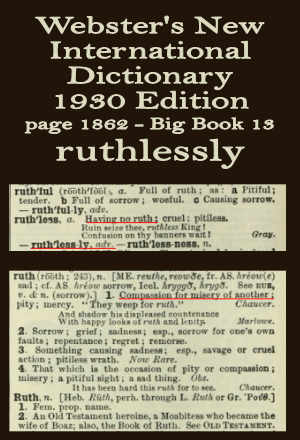

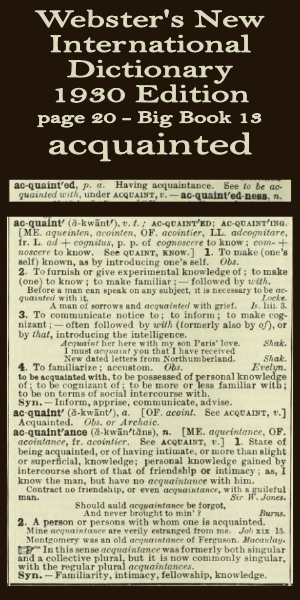
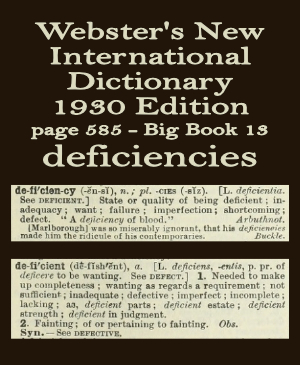
acquainted, deficiencies
My schoolmate visited me, and I fully acquainted him with my problems and deficiencies."
1
Big Book - Bill's Story - page 13
In this sentence the word acquainted functions as a verb. The word deficiencies functions as a plural noun. 2
Definitions from Webster's 1930 edition. 3
utmost
"I was to right all such matters to the utmost of my ability."
1
Big Book - Bill's Story - page 13
In this sentence the word "utmost" functions as a noun. 2
In this sentence utmost means the most possible, to the farthest limit possible.
Definition from Webster's 1930 edition. 3

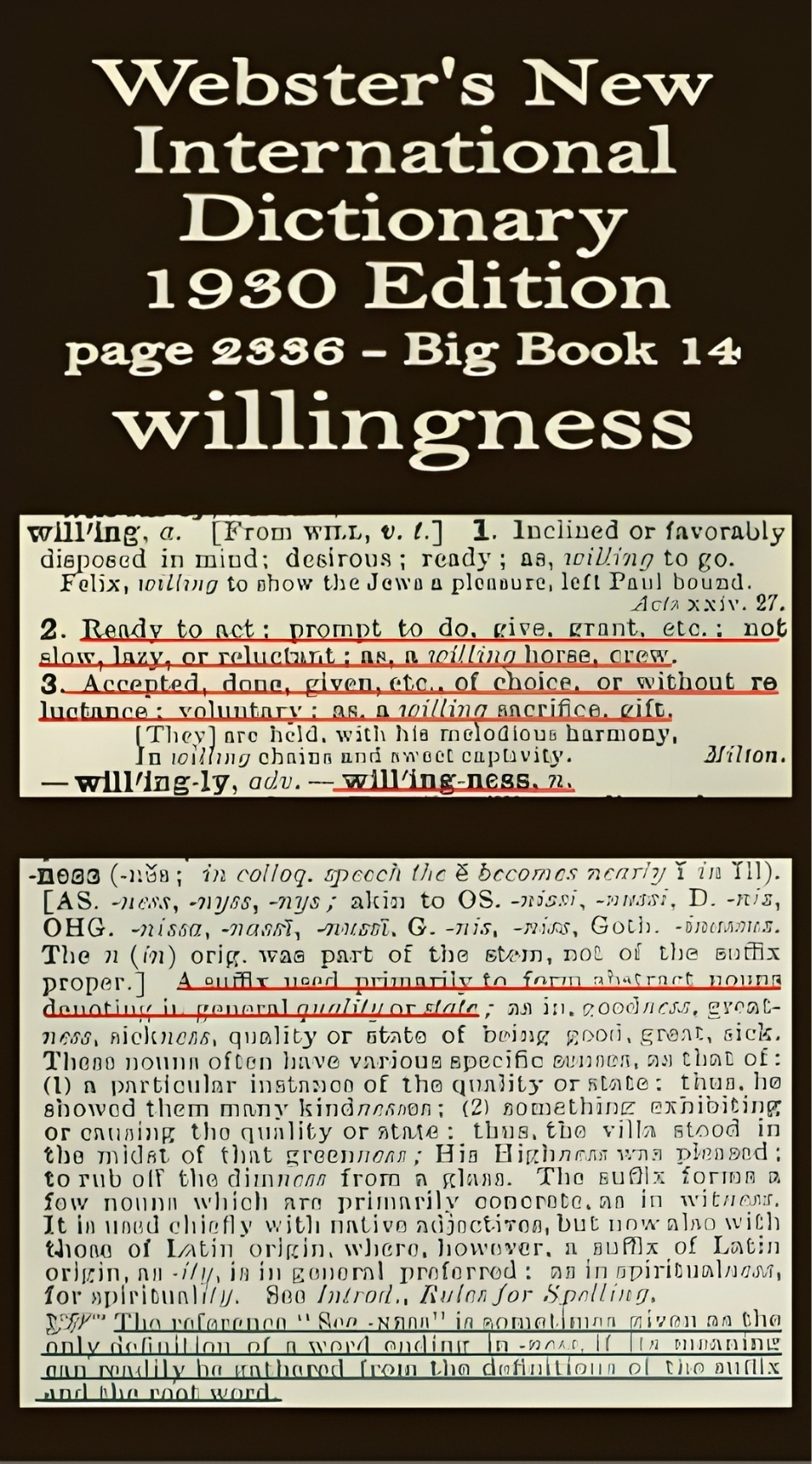
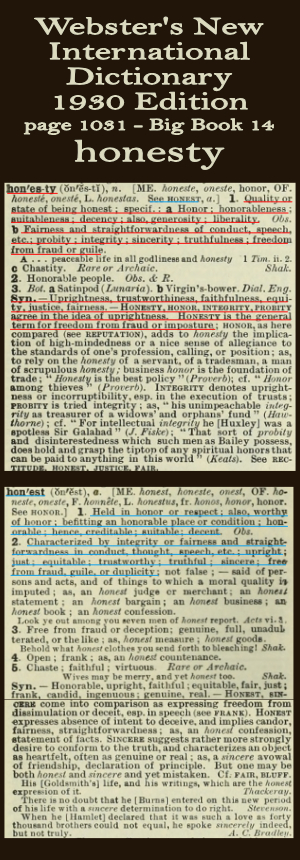
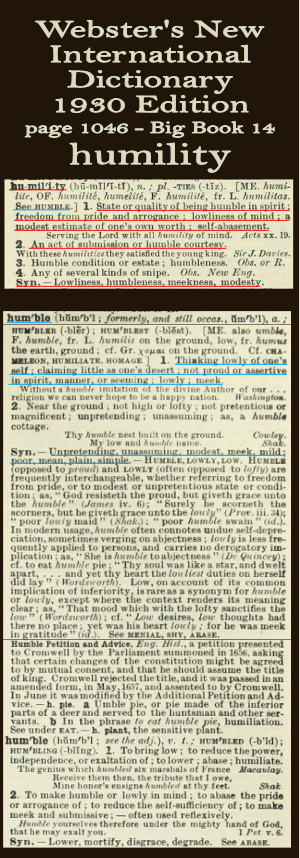
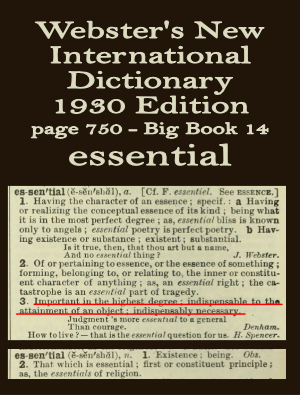
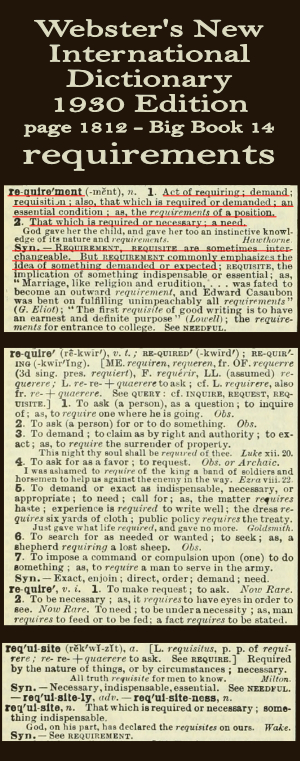
willingness, honesty, humility, essential, requirements
"Belief in the power of God, plus enough willingness, honesty and humility to establish and
maintain the new order of things, were the essential requirements."
1
Big Book - Bill's Story - spans pages 13 and 14
In the sentence, "willingness," "honesty," and "humility" function as nouns. The word "essential" acts as an adjective
modifying the noun "requirements".
2
In this sentence utmost means the most possible, to the farthest limit possible.
Definitions from Webster's 1930 edition. 3

|
on to page 14 |

|
back to page 12 |

|
jump to the top of this page |
Footnotes for page 13
1Quotes from the Big Book on listed on this page are from the public domain version, in the United States, of the 2nd edition of the book Alcoholics Anonymous. Accessible at 12step.org
2Sentence diagramming, to determine the word usage within the sentence, was performed by CoreNLP at corenlp.run.
3Definitions used are from the Webster's New International Dictionary of the English Language 1930 Edition. Access to this dictionary online is at Hathitrust.org
4An idiom is a phrase or expression that has a symbolic meaning different from the literal interpretation of the words. Over time, the meaning of an idiom can change or become outdated as its original historical context is forgotten by newer generations. For example, the idiom "grasping at straws" describes a desperate attempt to achieve something with very little chance of success. Originally, "straws" referred to the reeds that grow at the edges of a body of water—something a drowning person might try to grab onto in an effort to save themselves. For idioms not listed in the 1930 Webster Dictionary the Farlex Dictionary of Idioms was used.