
Chapter 1 - page 10
"I could almost hear the sound of the preacher's voice as I sat, on still Sundays, way over there on
the hillside; there was that proffered temperance pledge I never signed; my grandfather's good natured
contempt of some church fold and their doings; his insistence that the spheres really had their music;
but his denial of the preacher's right to tell him how he must listen; his fearlessness as he spoke of
these things just before he died; these recollections welled up from the past."
1
Big Book - Bill's Story - page 10
We will break this long sentence down into individual phases.
proffered temperance pledge
"... there was that proffered temperance pledge I never signed;..."
1
Big Book - Bill's Story - page 10
In this portion of the sentence temperance functions as an adjective, it modifies the noun "pledge," describing what kind of pledge (a pledge to adhere to temperance). 2
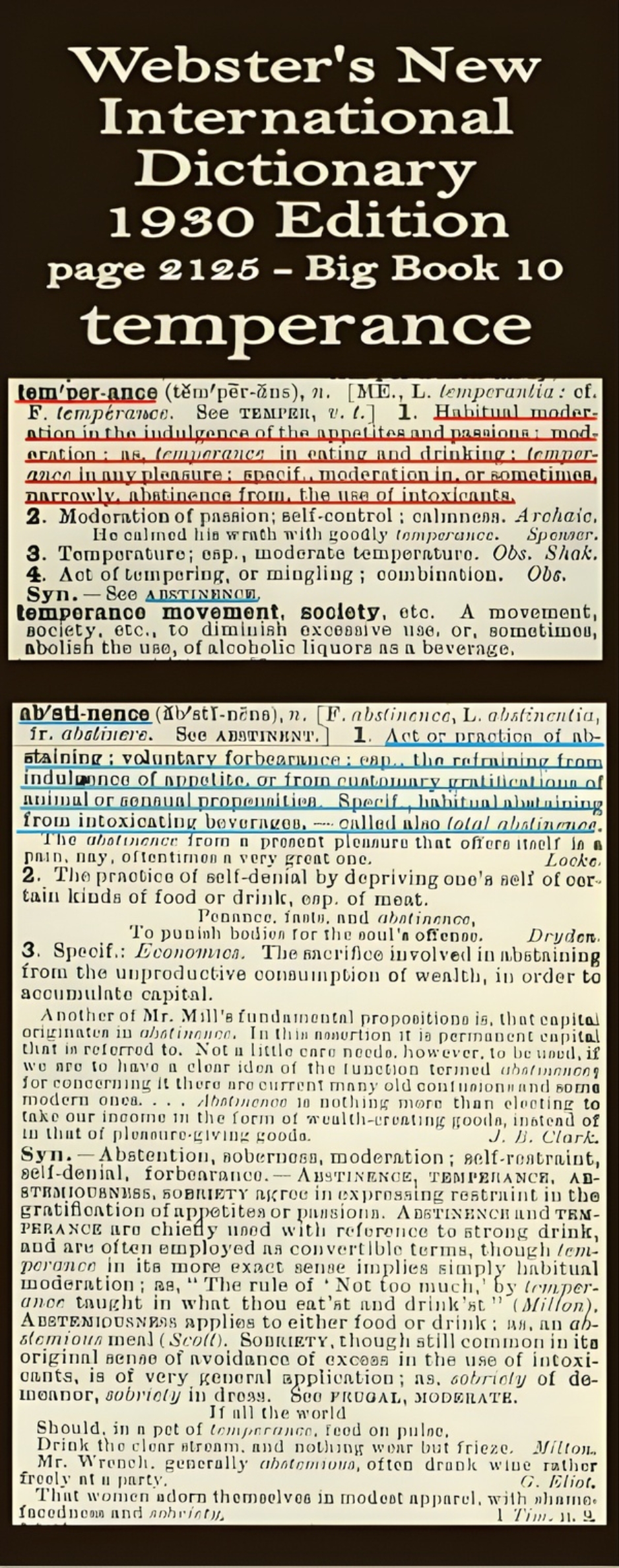
Temperance is the moderation of a behavior. This Big Book sentence refers to never consuming alcohol.
Definition from Webster's 1930 edition. 3
History of the Temperance Pledge
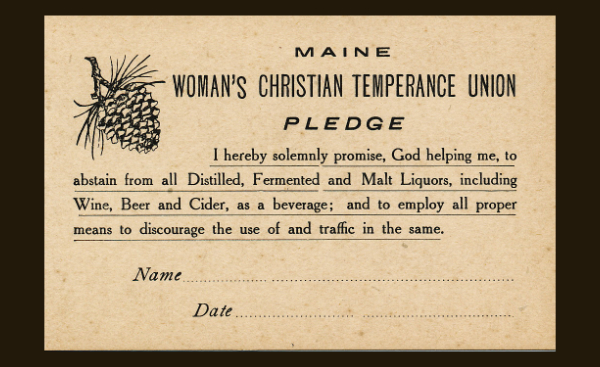
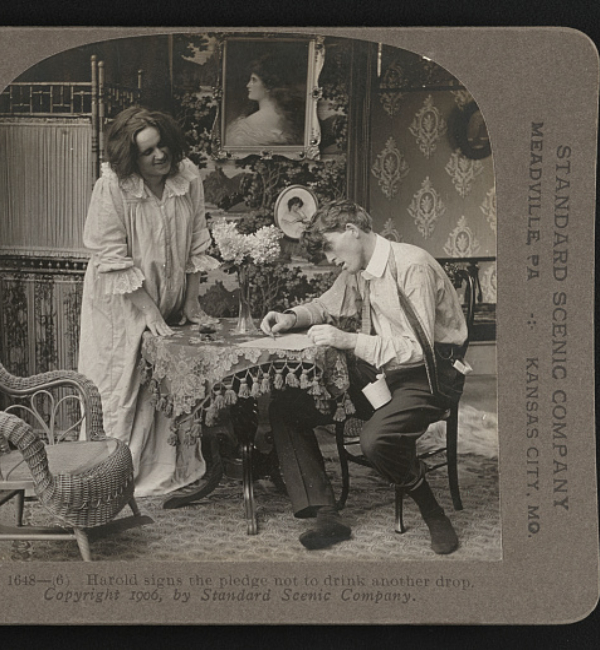
In the early 19th century, temperance societies in the United States began asking people to sign pledges to abstain from alcohol. These pledges were central to the temperance movement, rooted in Protestant churches, and aimed to reduce drunkenness and its social consequences. In the early days of the movement, people might pledge to stop drinking hard liquor like whiskey and gin, but later, it became more common to pledge to abstain from all alcohol, or "teetotalism." Many Temperance organizations formed, but the Anti-Saloon League (ASL) became the most influential in writing and passing the 18th Constitutional Amendment, which outlawed alcohol. Deeply influenced by religious ideas, the ASL was founded in 1893 and, by the early 1900s, was the leading organization lobbying for the prohibition of alcohol in the United States. The League in each state county by county. By 1913, over half of the United States was dry. From 1920 to 1933, called the Prohibition era, the making, transport, selling, and consumption of alcohol was prohibited in the U.S. as stipulated by the 18th Amendment of the U.S. Constitution. The public outcry led to the passing of the Volstead Act which created the 21st Amendment to repeal the 18th Amendment. Each state must ratify a Constitutional Amendment before it becomes law. On December 5, 1933, Utah ratified the Amendment, and Prohibition ended.
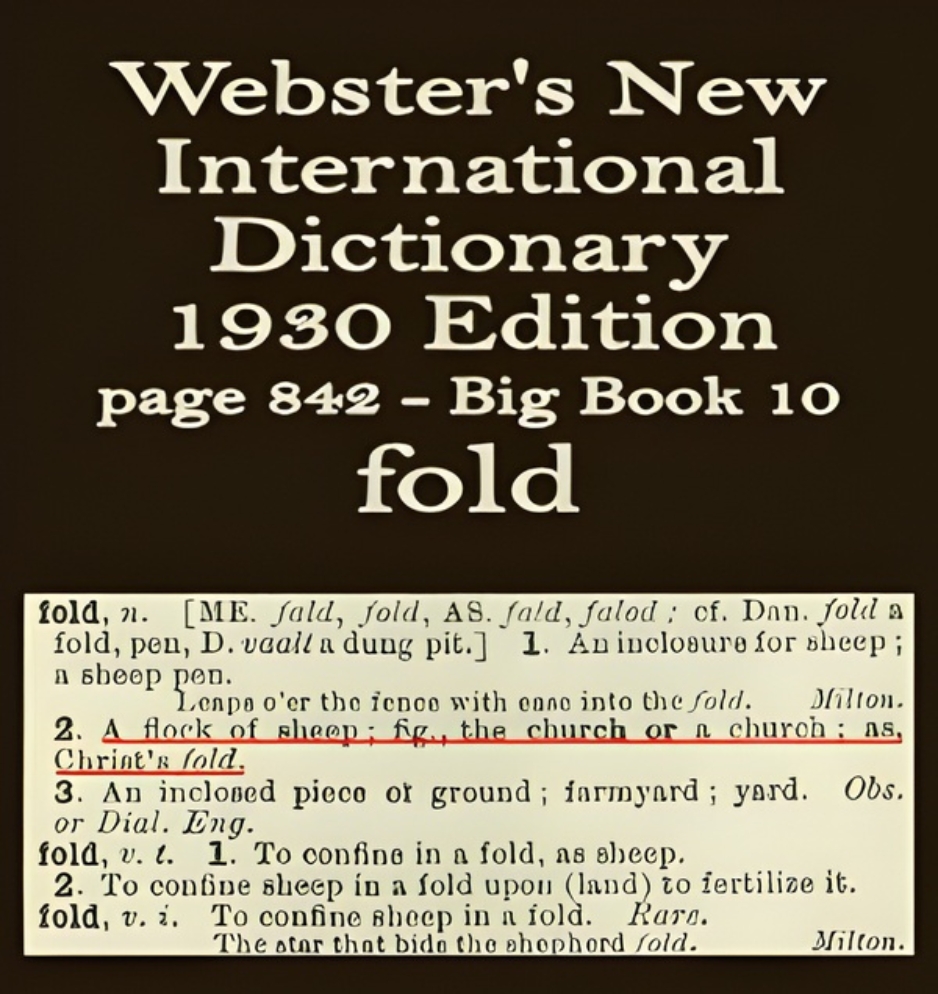
contempt, fold
"... my grandfather's good natured contempt of some church fold and their doings; ..."
1
Big Book - Bill's Story - page 10
In this sentence both contempt and fold function as nouns. 2
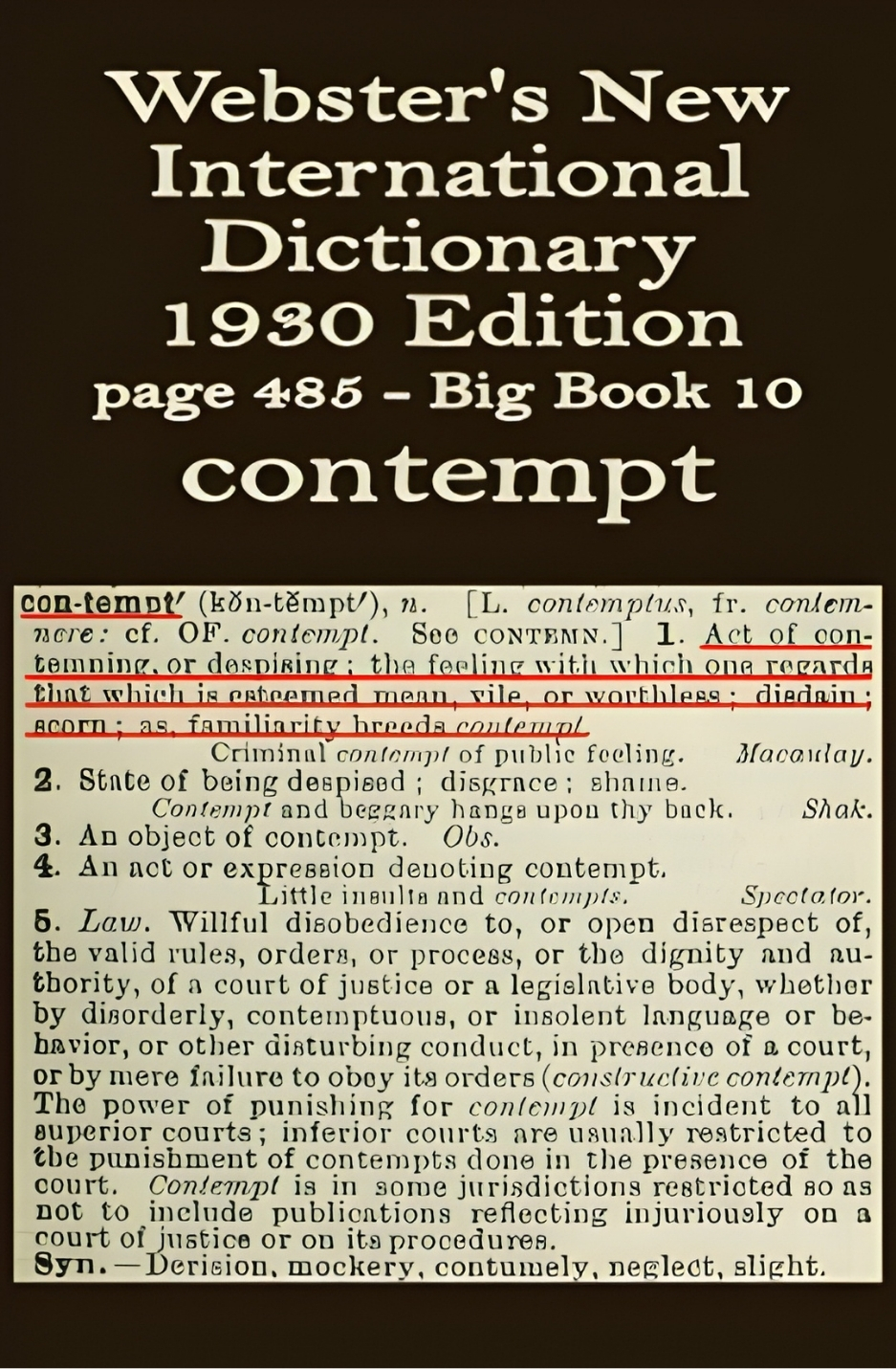
In this instance the phrase 'good natured contempt' refers to a form of affectionate teasing or gentle mockery. The word fold is a place where animals are contained, usually used when referring to sheep. In this case it is used to describe a church congregation.
Definitions from Webster's 1930 edition. 3
the spheres really had their music
"...his insistence that the spheres really had their music;..."
1
Big Book - Bill's Story - page 10
Bill Wilson, while listening to Ebby, recalls thoughts of his grandfather. We have clues of which grandfather Bill is referring to, it may have been a combination of both of them. His paternal grandfather, William C. Wilson, was also an alcoholic. His grandfather had tried numerous things to control his drinking. He had signed Temperance pledges without success, and had attended tent revival services in East Dorset. On a Sunday morning in 1878, he hiked to the top of nearby Mount Aeolus. There he claimed he had a vivid spiritual experience. Excited he hiked back into East Dorset. Across from the street from the inn he owned was the East Dorset Congregational Church. Fresh from his mountain top experience he burst into the Sunday service, interrupted the sermon, and told the story of his mountain top experience. William died in 1885 and he never had another drink during those eight years. Bill was born in 1895, so he never met his grandfather but growing up Bill had heard this story many times from his mother. 4
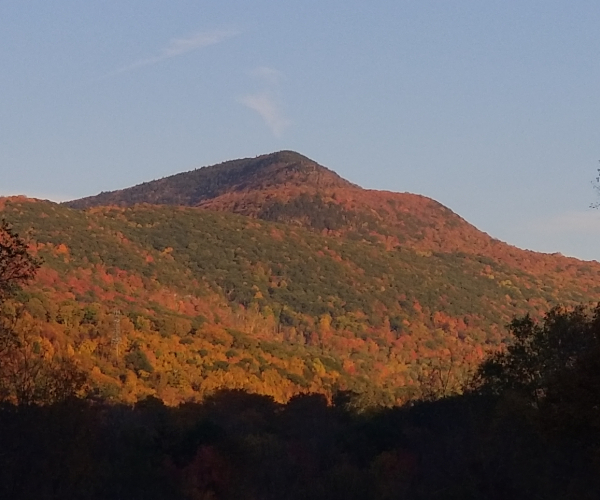
Photo CCO License - Wikimedia

Bill's father, Gilman Wilson, worked as a quarryman, lumberjack, and lumber dealer, and struggled with alcoholism. After Bill's parents divorced, Gilman moved to Canada, remarried, and had more children. Bill rarely saw his father after the divorce. Bill's mother, Emily Griffith, took Bill and his sister to live with her parents. Later, she left the children in their grandparents' care while she attended medical school in Boston. Bill and his sister, Dorothy, grew up with their grandparents, Fayette and Ella Griffith. The focus in this Big Book passage is mainly on his maternal grandfather. Fayette became the main father figure in Bill's life as he was growing up. There are no records of Fayette's church affiliation, nor is any mentioned in the many local newspaper articles about Fayette. He loved to read, encouraged it, and passed this passion to Bill. In Bill's biographies, Fayette is described as "a man of honor and a man of quiet faith." 5 His obituary notes that at the time of his death, he was the last survivor of the 103 men from the county who answered President Lincoln's call to join the Union Army and fight in the Civil War. 6
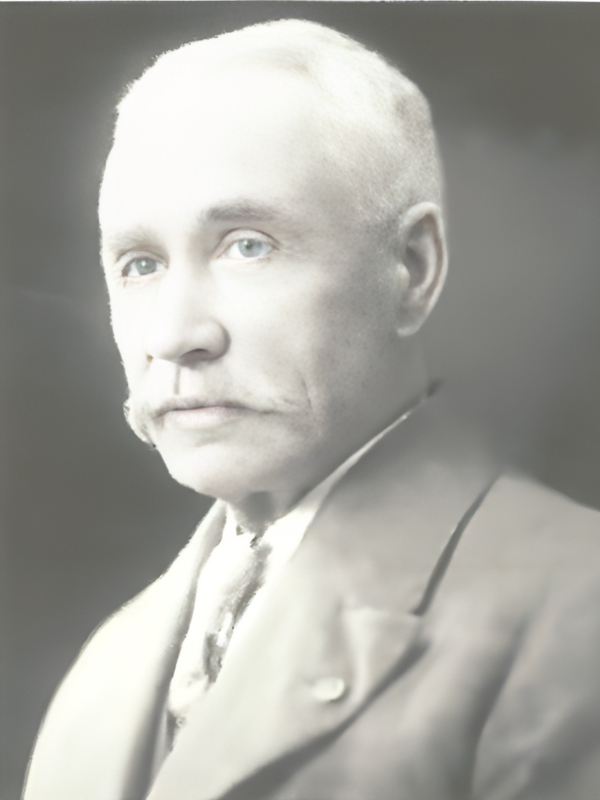
Grandfather of Bill Wilson
photo from 1906
What is this music of the spheres?
This phrase is traced to the Greek mathematician and philosopher Pythagoras of Samos. The same Pythagoras who brought us the formula for calculating the length of the hypotenuse (the long side) of a right triangle. Pythagoras theorized that the pitch of any given musical note comes from the frequency of its vibration, which is correct. During his lifetime, the accepted concept of the solar system placed the Earth at its center, with all other bodies rotating around it. He theorized that every object in the universe generated a unique frequency from its motion. Pythagoras stated, "There is geometry in the humming of the strings, there is music in the spacing of the spheres". Today, we know that the solar system does not rotate around the Earth, and we know the correct order of the planets. But time has proven that Pythagoras and his followers were partially correct about frequencies being emitted by objects in the universe. Today, the use of radio telescopes to observe the frequencies emitted by stars, planets, galaxies, and other celestial bodies allows man to see far beyond the limits of visual instruments.
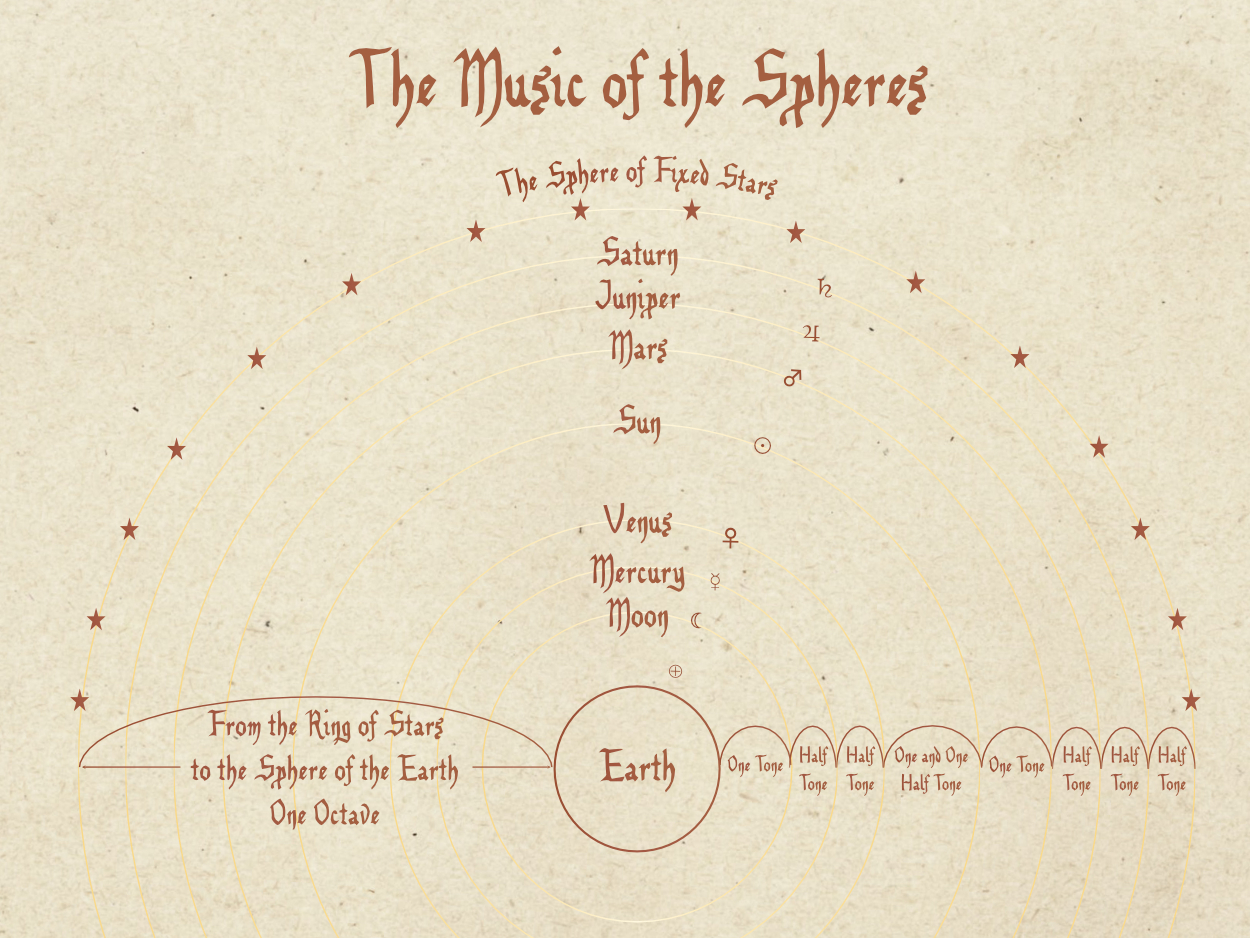
assigning tones to the solar system
concept from Thomas Stanley
"The History of Philosophy" Part 5 published 1665
click here to see enlarged image
“Musica Universalis” translates to the phrase “Music of the Spheres”. The frequencies at which different celestial bodies vibrate and the harmonic movement of the universe. The belief that Earth was the center of the universe led them to order the planets differently than later discoveries showed. They theorized that the Earth's sphere to the Moon's sphere was an entire octave. From the Moon to Mercury was just a half tone or step. Beyond the known solar system, all other stars were organized into a ring referred to as the Fixed Sphere of Stars. From it to Earth, Pythagoras assigned one octave. As the theory evolved over the centuries, astronomers eventually concluded that the music of the spheres could be heard only by the soul. In the passage, Bill is recalling his grandfather's belief in the natural order of creation, in contrast to the rules of an organized religion. 6
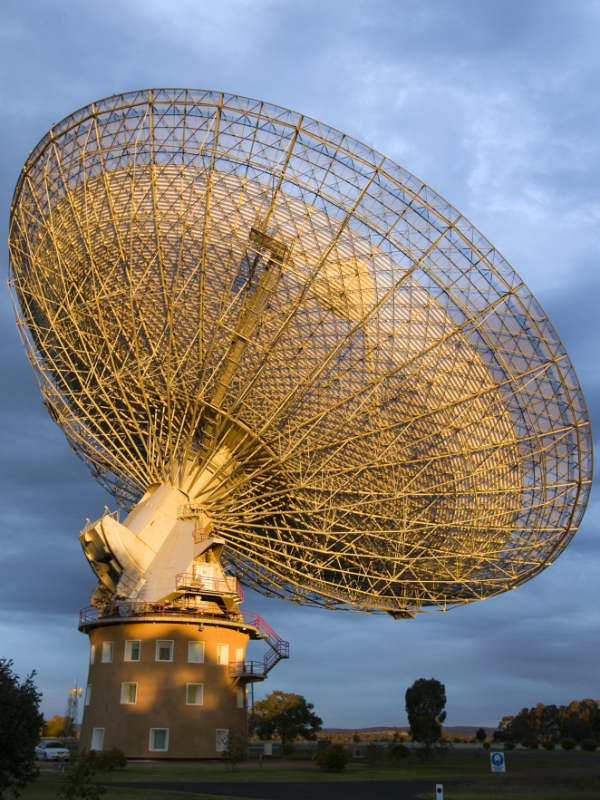
The telescope measures naturally-produced radio energy from space
New South Wales, Australia

NASA, JPL-Caltech, Susan Stolovy (SSC/Caltech)
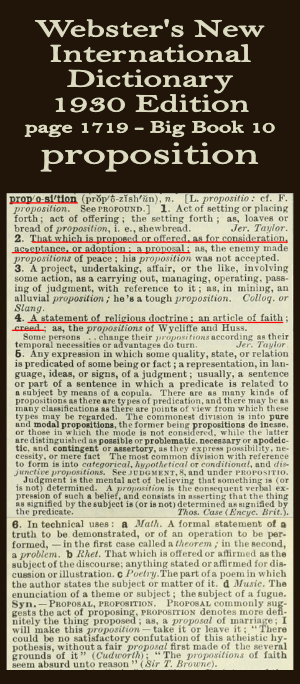
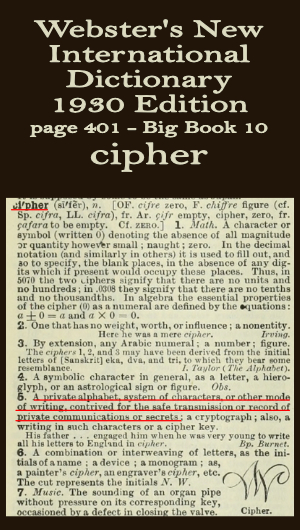
proposition, cipher
"Few people really are, for that means blind faith in the strange proposition that this universe originated
in a cipher and aimlessly rushes nowhere."
1
Big Book - Bill's Story - page 10
In this sentence the word proposition and cipher both function as a nouns. 2
In this context, cipher refers to zero, or nothingness, (a void or absence of meaning/purpose). It signifies the idea that the universe originated from "nothing" or an insignificant, meaningless starting point.
Definitions from Webster's 1930 edition. 3

|
on to page 11 |

|
back to page 9 |

|
jump to the top of this page |
Footnotes for page 10
1Quotes from the Big Book on listed on this page are from the public domain version, in the United States, of the 2nd edition of the book Alcoholics Anonymous. Accessible at 12step.org
2Sentence diagramming, to determine the word usage within the sentence, was performed by CoreNLP at corenlp.run.
3Definitions used are from the Webster's New International Dictionary of the English Language 1930 Edition. Access to this dictionary online is at Hathitrust.org
4Historical events from the book "Bill W." by Francis Hartigan (2000) page 11.
5Historical events taken from the book "Bill W." by Robert Thomsen (1975) chapter 4.
6Obituary for Fayette in The Manchester Journal, Manchester, VT - Thursday, June 12, 1924 page 1. Click to see Fayette's obituary.