
Chapter 1 - page 4
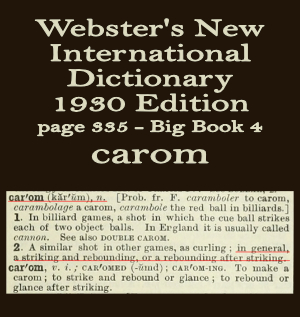
carom
It was fun to carom around the exclusive course which had inspired such awe in me as a lad."
1
Big Book - Bill's Story - page 4
In this sentence carom is used as noun. 2
In golf, a carom is when a ball caroms off the fairway and into the rough.
Definition from Webster's 1930 edition. 3
impeccable
I acquired the impeccable coat of tan one sees upon the well-to-do."
1
Big Book - Bill's Story - page 4
In this sentence impeccable is used as an adjective. 2
Definition from Webster's 1930 edition. 3

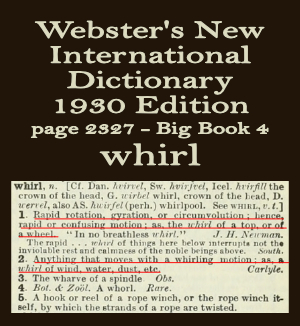
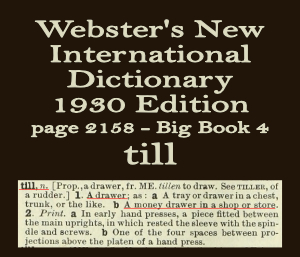
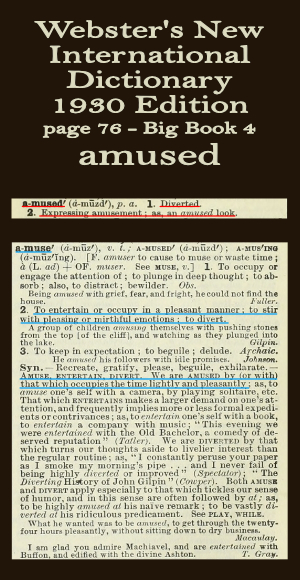
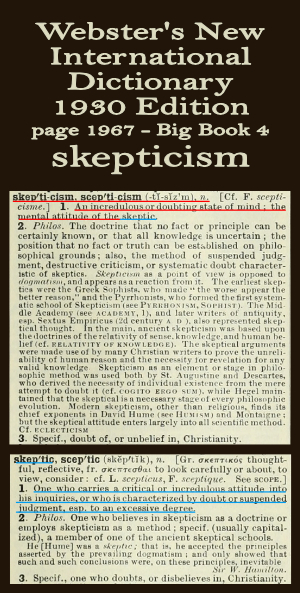
whirl, till, skepticism, amused
The local banker watched me whirl fat checks in and out of his till with amused skepticism."
1
Big Book - Bill's Story - page 4
In this sentence whirl, till, and skepticism are used as nouns. Amused is used as an adjective. 2
In the late summer of 1929 Bill became uneasy with the swinging movements in stock. At the time he was almost the majority shares in Penick & Ford. Deciding it was time to sell some, he and Lois returned to New York. Consulting with a few men, he considered experts, they convinced him there was still time before the market would peak. He changed his decision and held his P&F shares. 4
Definitions from Webster's 1930 edition. 3
ticker & XYZ-32
"The ticker still clattered. I was staring at an inch of the tape which bore the inscription XYZ-32."
1
Big Book - Bill's Story - page 4
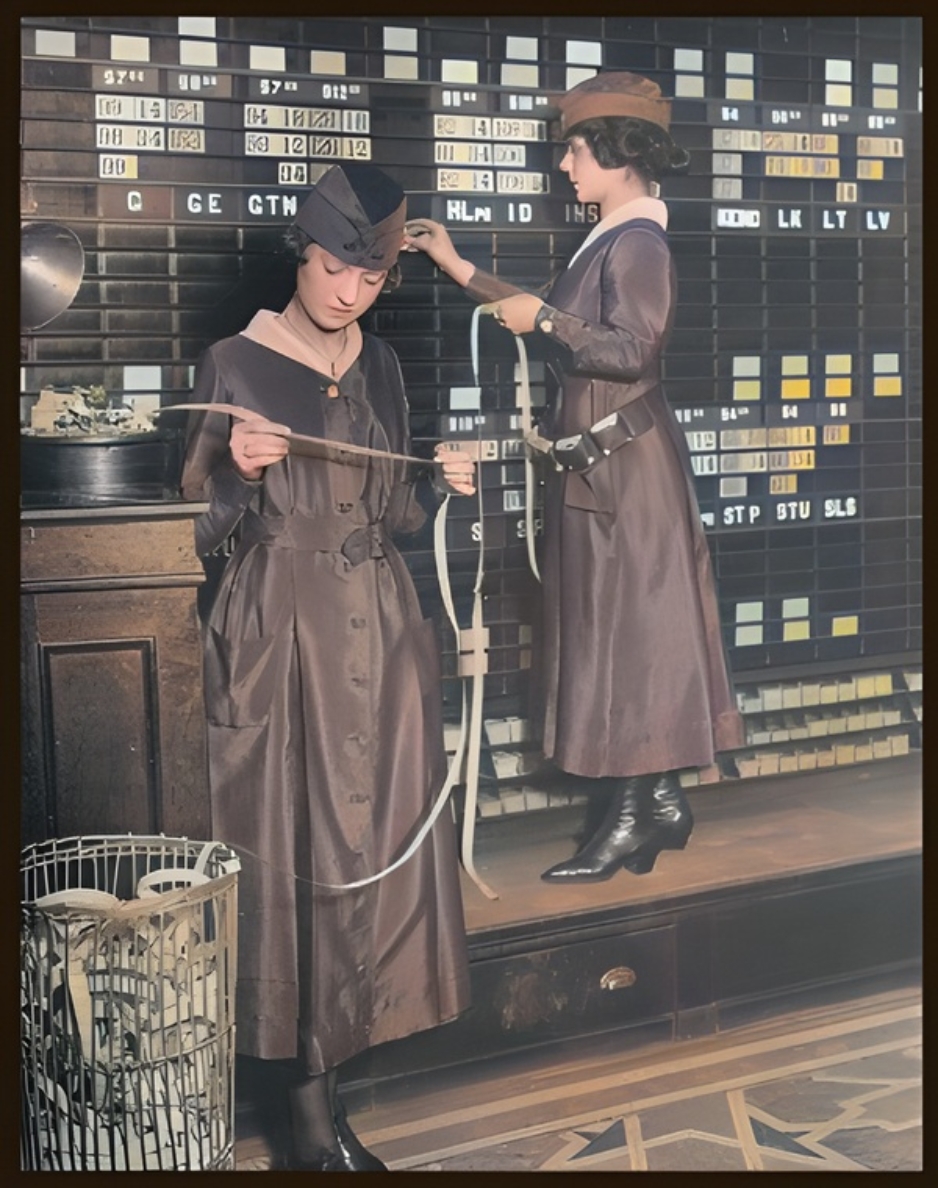
The Waldorf-Astoria Hotel is employing women to operate tickers and stock exchange boards.
The Waldorf is the first to employ women in its various departments,
in order to release men for war work.
from NARA - photo taken Sep 18, 1947
This passage has two items to be defined. The ticker and XYZ-32
In 1870, Thomas Edison invented the Stock Ticker. It was attached to telegraph lines and printed the current prices of stocks trading. Using a paper ribbon, the "ticker" printed a stock symbol followed by the last price per share at which the stock sold. The paper ribbon was called "ticker tape". Before the invention of the ticker, a telegraph operator would listen to a series of clicks, called Morse code, then write each letter as it was received; this commonly caused a 15 to 20 minute delay in relaying the information. Edison's ticker used a specialized code that transmitted a character each second. Tickers were typically placed in Stock exchanges, large investment firms, private investors' offices, and hotel lobbies. In larger environments, clerks would read the ticker and post the information on a large chalkboard for all to see.
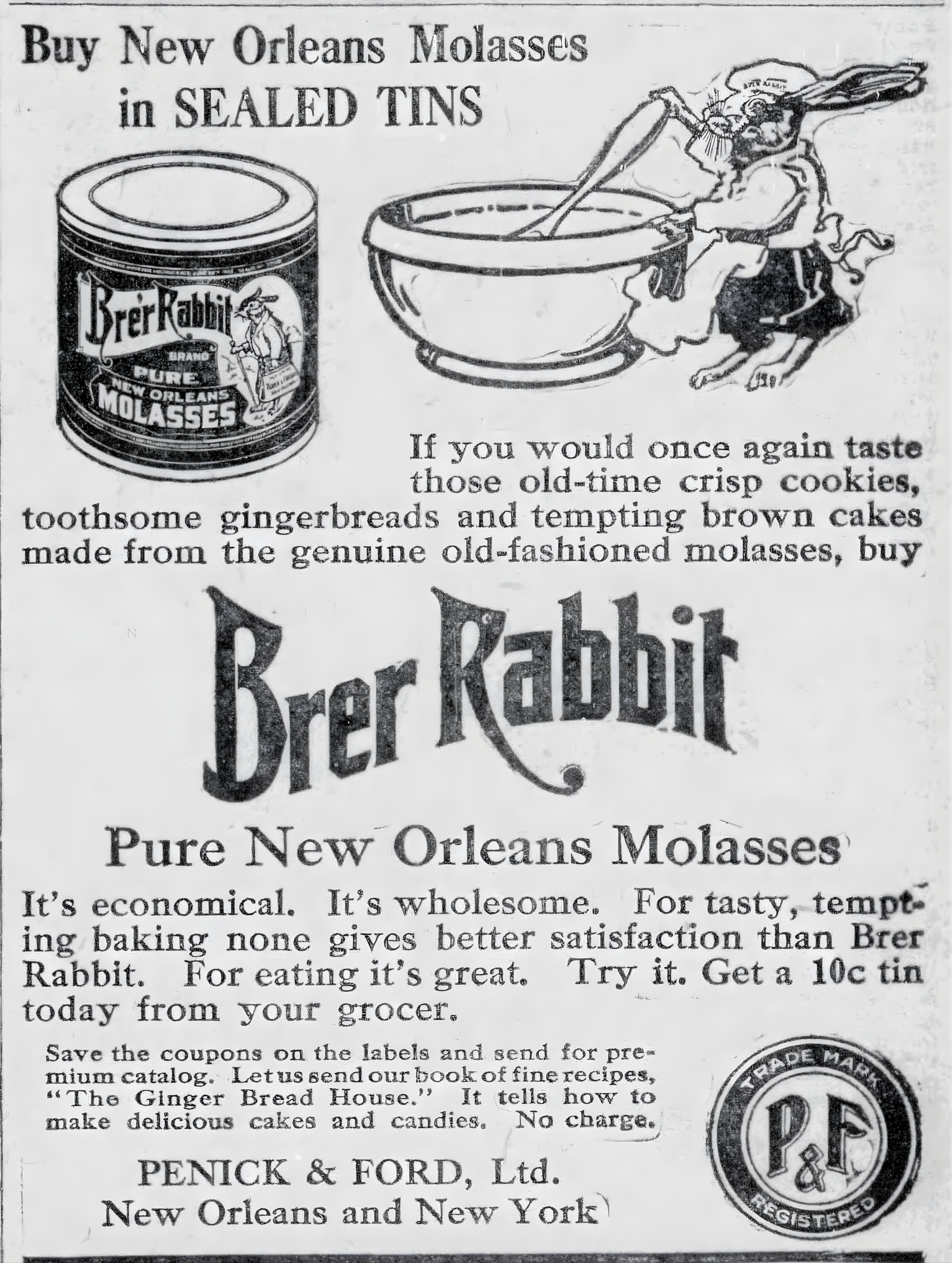
XYZ-32 - In the original draft manuscript of the Big Book 5, Bill used the ticker symbol, PKF, but during editing, it was changed to XYZ. The stock symbol PKF stood for Penick & Ford Ltd., a stock in which Bill owned many shares. Penick & Ford produced starch for the food, textile, and paper industries. The products Brer Rabbit Molasses, Vermont Maid Syrup, and My-T-Fine Desserts were all part of their brand. The company is still active today, using the name Penford Products Company. On October 23, 1929, known as Black Thursday, nationwide panic set in, and 13 million shares of common stock were sold at a loss. But despite the turmoil, many speculated the worst was behind them, so Bill held onto his stocks.
On October 29, after drinking at a Manhattan hotel bar, Bill visited a nearby brokerage firm. The ticker was still printing at 8 p.m. Digging through a waste basket, he found that PKF had lost half its value that day. Though drunk, he understood the blow to his investments. Two days later, P&F traded at $38, down from a yearly high of $60.87. Within weeks, $30 billion vanished in the U.S. The Roaring Twenties suddenly ended, giving way to the Great Depression.
The next morning, Bill called an old customer in Montreal, Canada, where the impact had been less severe. Within weeks, the Montreal brokerage firm Greenshields & Company offered him a job. By mid-November, Bill and Lois were living in Montreal and had nearly regained their lavish lifestyle. In the fall of 1930, the consequences of his many alcohol-inspired escapades finally found their mark when the firm fired him to guard their reputation. 6
Napoleon, Elba, St. Helena
"I felt like Napoleon returning from Elba. No St. Helena for me!"
1
Big Book - Bill's Story - page 4
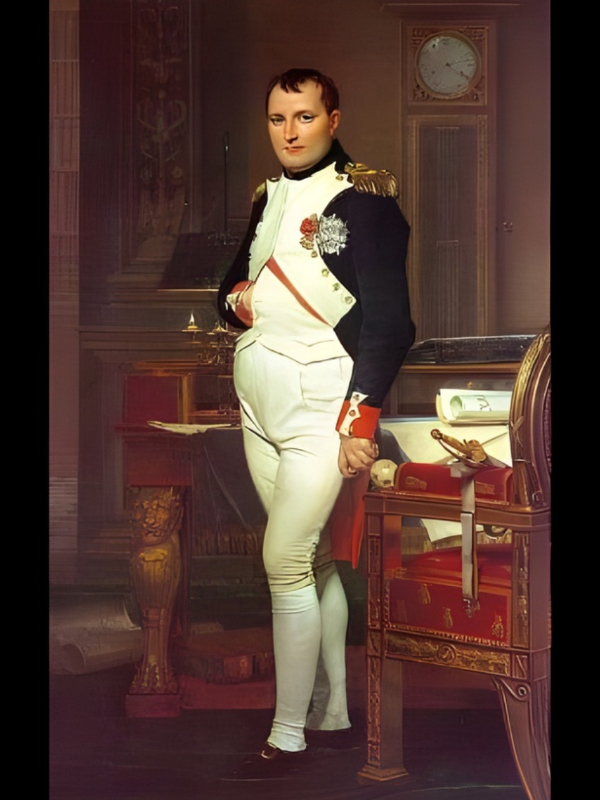
painting by Jacques-Louis David
In case you're not familiar with Napoleon's history, here's a brief summary to provide context for Bill's statement: Napoleon Bonaparte (1768-1821) was a renowned military leader who expanded France's reach as Emperor. Historians disagree on the exact number of his wins vs. losses, but the scoreboard of history suggests he won 70 battles and lost 10 during his career. These included his famous winter march across the French Alps. After many conquests, he led a campaign with 600,000 troops into Russia. Upon reaching Moscow, they found the city abandoned and mostly destroyed. Facing the harsh Russian winter, Napoleon returned to France with fewer than 10,000 soldiers. The defeat came as a low point in his life; he attempted suicide on the return journey to Paris, but the poison he carried for this purpose had lost most of its potency, which left him with a painful, failed attempt.
By March 1814, Austria, Russia, Prussia, and Great Britain all saw him as a threat to their security and took proactive action by forming a coalition against him. As the allies surrounded Paris, Napoleon countered by positioning his troops for a rear attack. But his plan was thwarted when Paris City Officials, desperate to preserve the city, negotiated a treaty with the Allied forces. The treaty exiled Napoleon to the French-owned island of Elba, located 6 miles off the coast of Tuscany, Italy. His stay on Elba consisted of 300 days of plotting his return to France. He put together a small fleet and set sail for France. This coup failed when the British Army defeated him at Waterloo in June 1815.
While surrendering, he requested exile to America, but was instead sent to the British-ruled island of Saint Helena.
St Helena, located over 1,200 miles west of the coast of Africa, was far enough away to foil any future coups.
Napoleon spent his remaining years on the island, succumbing to stomach cancer in 1821. In 1840, the French Government
exhumed His body and entombed it in Paris.

Now that we know the history, let's look at what Bill meant when he wrote “I felt like Napoleon returning from Elba. No St. Helena for me!”1. Napoleon thought he could overcome his situation when he came out of exile on Elba to take back Paris, but he soon found out he was still defeated. In the same way, Bill believed he had left behind both the Great Depression and his drinking problems by moving to Canada, but he soon found out his problems had followed him. After losing his job in Canada because of his drinking, his only option was to return to Brooklyn and live with his in-laws, feeling defeated much like Napoleon at Waterloo. 6
Footnotes for page 4
1Quotes from the Big Book on listed on this page are from the public domain version, in the United States, of the 2nd edition of the book Alcoholics Anonymous. Accessible at 12step.org
2Sentence diagramming, to determine the word usage within the sentence, was performed by CoreNLP at corenlp.run.
3Definitions used are from the Webster New International Dictionary of the English Language 1930 Edition
4Historical events taken from the book "Bill W." by Robert Thomsen (1975) pages 152 - 154.
5from 'The Book That Started It All: The Original Working Manuscript of Alcoholics Anonymous' is a reproduction of the edited, final draft of the "Big Book." It contains showing the handwritten changes, debates, and discussions that shaped the final text. Published by Hazelden.
6Historical events taken from the book "Bill W." by Francis Hartigan (2000) page 45.

|
on to page 5 |

|
back to page 3 |

|
jump to the top of this page |