
Chapter 1 - page 3
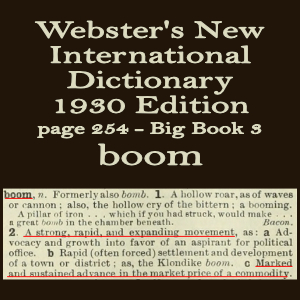
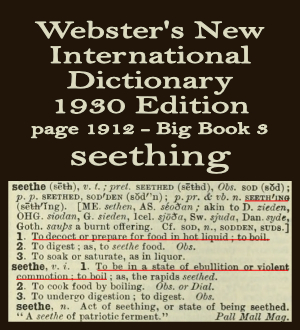
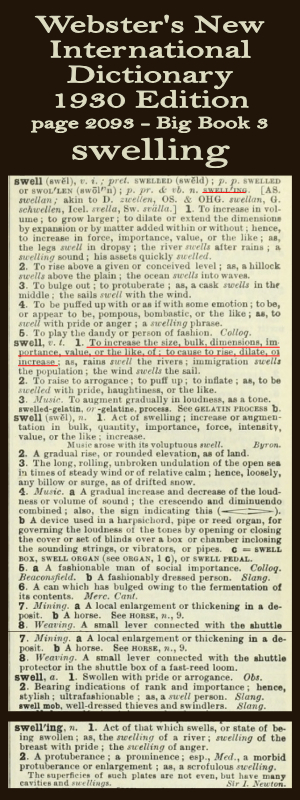
boom, seething, swelling
The great boom of the late twenties was seething and swelling."
1
Big Book - Bill's Story - page 3
In this sentence boom is used as a noun. Seething and swelling are both used as verbs. 2
"The great boom of the late twenties" refers to the decade of the "Roaring Twenties". This is a period that began after the end of World War I and concluded with the onset of the Great Depression. During these years, the populations of American cities outgrew the agricultural population, automobiles replaced horses as the main mode of transportation. The period is remembered for it's optimism, prosperity, the birth of jazz, and the widespread defiance of alcohol prohibition. Furthermore, the passage of the 19th Amendment in 1920 granted women the right to vote for the first time in the United States.
Definitions from Webster's 1930 edition. 3
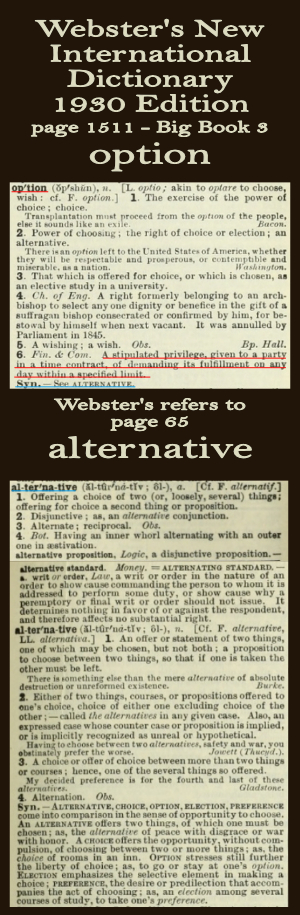
option
The exercise of an option brought in more money, leaving us with a profit of several thousand dollars for that year."
1
Big Book - Bill's Story - page 3
In this sentence option is used as a noun. 2
A stock option is not a share of stock. Instead, it is an agreement allowing the holder of the option to purchase stock shares at a predetermined price and by a specified date.
Definition from Webster's 1930 edition. 3
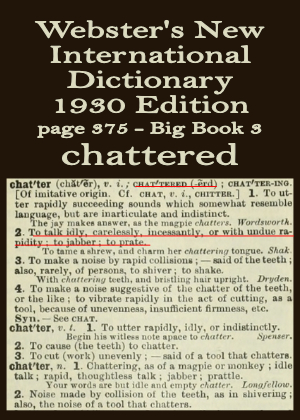
chattered
Everyone spent in thousands and chattered in millions."
1
Big Book - Bill's Story - page 3
In this sentence chattered is used as a verb. 2
Definition from Webster's 1930 edition. 3
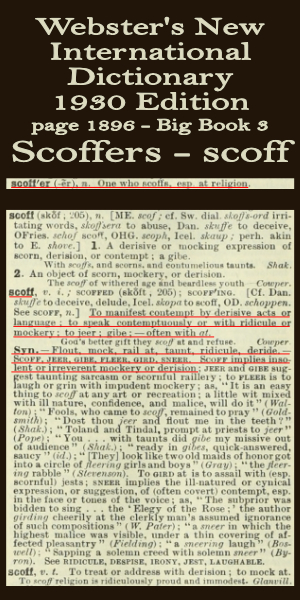
Scoffers, scoff
Scoffers could scoff and be damned."
1
Big Book - Bill's Story - page 3
In this sentence scoffers is used as a noun, scoff is used as a verb. 2
Definition from Webster's 1930 edition. 3
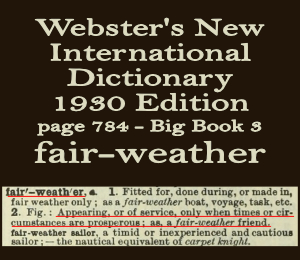
fair-weather
I made a host of fair-weather friends."
1
Big Book - Bill's Story - page 3
In this sentence fair is used as an adjective, and weather is used as a noun. 2
Definitions from Webster's 1930 edition. 3
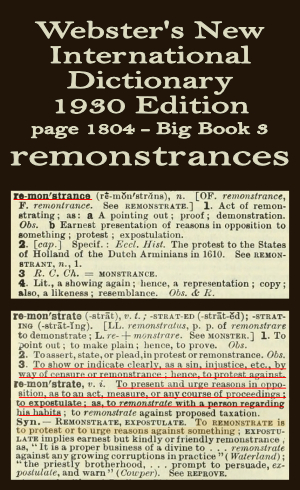
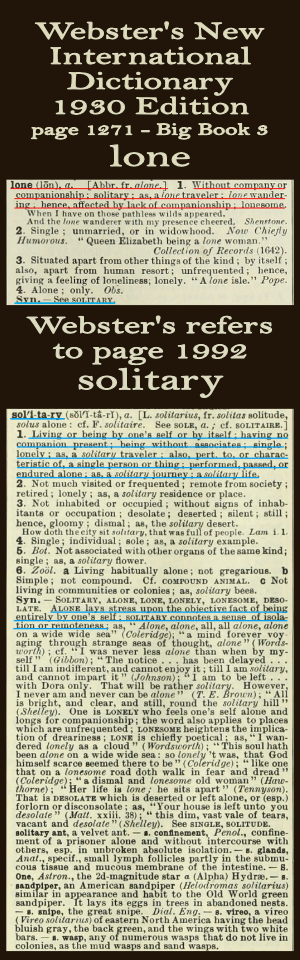
remonstrances, lone wolf
The remonstrances of my friends terminated in a row and I became a lone wolf."
1
Big Book - Bill's Story - page 3
In this sentence fair is used as an adjective, and weather is used as a noun. 2
The idiom "lone wolf" originates from wolf behavior, it refers to an animal that acts independently or generally lives or spends time alone instead of with a group. A lone wolf in winter hunts and fends for itself. See lone wolf trait at The Free Dictionary. 4 To remonstrate is to point out a wrong. His friends pointed out his behaviors with drinking and terminated their relationship with him. Webster's definition states lone is from the word alone, then refers to the word solitary, meaning isolation. The disease of alcoholism isolates those engulfed by it.
Definitions from Webster's 1930 edition. 3
Walter Hagen
"We went at once to the country, my wife to applaud while I started out to overtake Walter Hagen."
1
Big Book - Bill's Story - page 3
In 1929 Bill and Lois returned to Vermont. Concerned about his drinking and increasing bouts of depression, he took up golf in an attempt to improve his health. Bill played every day at the Ekwanok Country Club in Manchester, sometimes three rounds a day. Growing up nearby, Bill was very familiar with the 18-hole course. Todd Lincoln, the son of President Abraham Lincoln, served as the club's long-time president, making it a popular meeting place for the elite residents of Manchester. 5
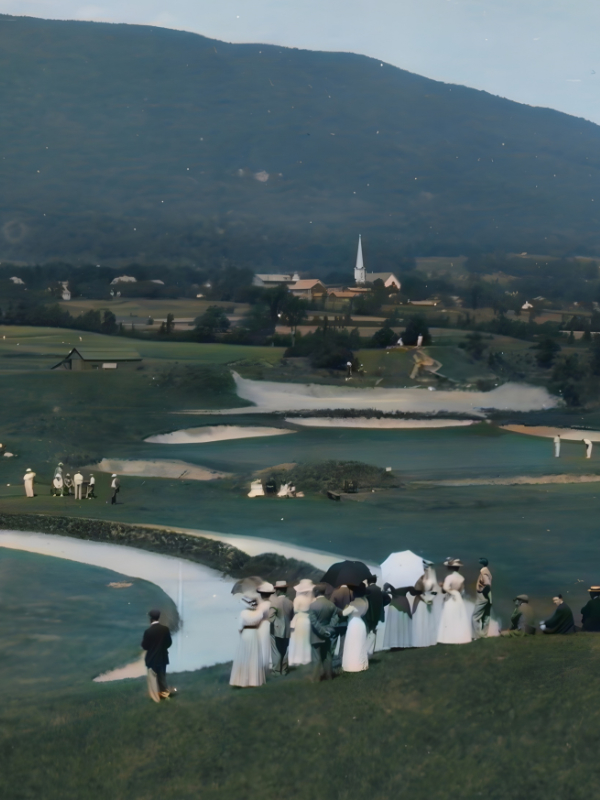
photo taken 1911 - Public Domain - Library of Congress
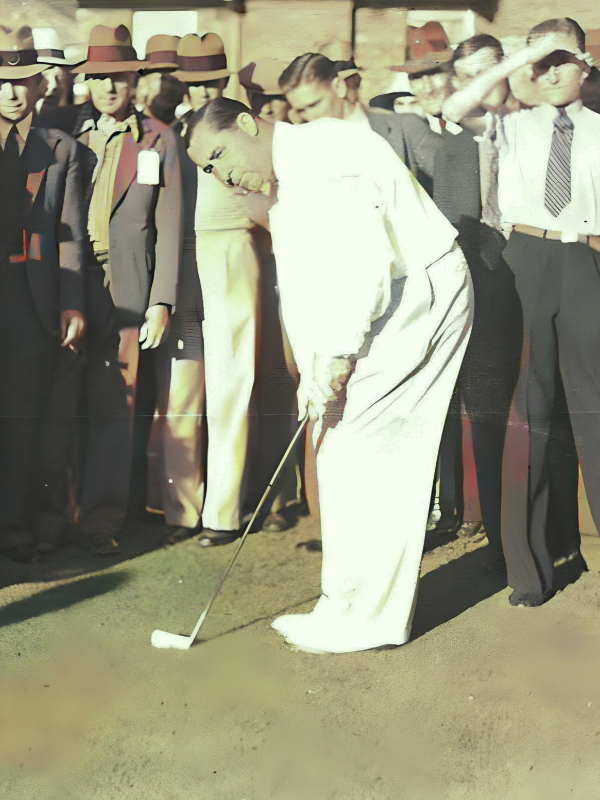
Sydney, Australia ~ 20 March 1937
Walter Hagen (1892-1969) was a world-renowned professional golfer; The records he set have only been surpassed by those of Jack Nicklaus and Tiger Woods. Raised in Rochester, New York, as a child Walter worked as a caddy at the local golf course to earn money for his large family. Building on this experience, by his mid-teens, he had become an expert golfer and was giving paid lessons to the club members. At the 1913 U.S. Open, other professional golfers told him to step aside and that he could practice after they were through. However, by the end of the tournament, they knew who he was as he placed fourth. The next year, 1914, he won the U.S. Open. Continuing to rise in prominence, Walter went on to win tournaments and exhibition matches around the world. He then designed a matched set of golf clubs for Wilson Sports, the first affordable set available to the general public. His success continued as he became the first professional golfer to become a millionaire, which may have encouraged Bill Wilson's golf aspirations. To this day, Hagen is still recognized as the "Father of Professional Golf". Later in life, Walter battled throat cancer, and he lost the battle in 1967 at the age of 76. Given his renown at the time, readers of the 1939 published Big Book would have immediately recognized the name Walter Hagen.

|
next - page 4 |

|
back - page 2 |

|
jump to the top of this page |
Footnotes for page 3
1Quotes from the Big Book on listed on this page are from the public domain version, in the United States, of the 2nd edition of the book Alcoholics Anonymous. Accessible at 12step.org
2Sentence diagramming, to determine the word usage within the sentence, was performed by CoreNLP at corenlp.run.
3Definitions used are from the Webster New International Dictionary of the English Language 1930 Edition
4An idiom is a phrase or expression that has a symbolic meaning different from the literal interpretation of the words. Over time, the meaning of an idiom can change or become outdated as its original historical context is forgotten by newer generations. For example, the idiom "grasping at straws" describes a desperate attempt to achieve something with very little chance of success. Originally, "straws" referred to the reeds that grow at the edges of a body of water—something a drowning person might try to grab onto in an effort to save themselves. For idioms not listed in the 1930 Webster Dictionary the Farlex Dictionary of Idioms was used.
5Historical events taken from the books "Bill W." by Robert Thomsen (1975), and "Bill W." by Francis Hartigan (2000).